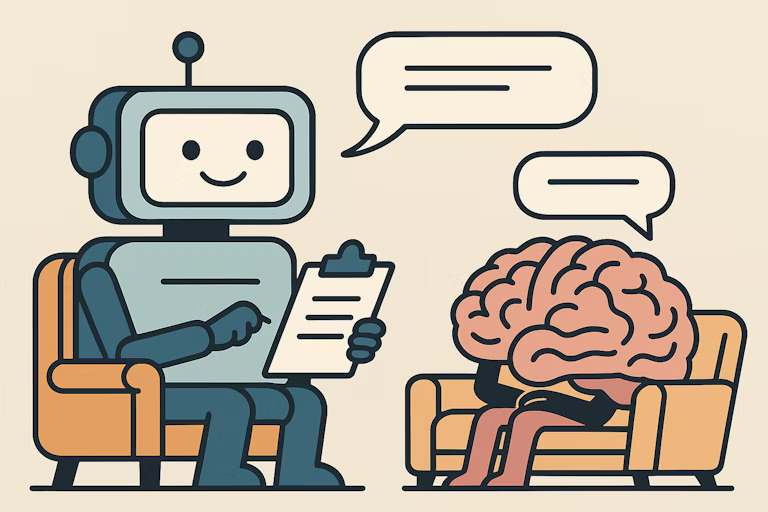
Imagine this: you’re feeling anxious at 2 a.m., scrolling through your phone for comfort, and instead of a friend, you find yourself talking to an AI chatbot. It listens, responds kindly, and even suggests breathing exercises. For millions today, this isn’t science fiction, it’s self-care. AI chatbots like Wysa, Woebot, and Replika promise empathy in code and therapy through text. In the quiet hours of loneliness, they feel almost human. But as someone studying psychology, I can’t help but wonder whether these lines of code truly replace the warmth of human connection?
The Digital Shoulder to Cry On
AI chatbots are quietly reshaping how people seek emotional support. In a world where therapy remains costly, inaccessible, and often stigmatized, these digital companions offer a 24/7, judgment-free space to talk. Wysa, developed with clinical psychologists, uses Cognitive Behavioral Therapy (CBT) techniques to help users challenge negative thoughts. Similarly, Woebot, born from Stanford research, checks in daily with friendly, supportive conversations.
A 2021 study in the Journal of Medical Internet Research found that regular users of such chatbots reported noticeable reductions in anxiety and depressive symptoms. For many, this accessibility is life-changing and a quiet companion available anytime, anywhere, offering what so many crave today: someone (or something) that listens without judgment.
Between Empathy and Illusion
Yet, there’s an uneasy truth beneath the comfort. AI can mimic empathy but cannot feel it. It doesn’t hear the tremor in a voice, sense hesitation before a confession, or recognize the silence that speaks louder than words. Its responses, though kind, are calculated, not felt. As a trainee psychologist, I see the risk of emotional dependence on technology that cannot truly reciprocate. Real therapy thrives on human presence, intuition, and warmth, the qualities no algorithm, however advanced, can replicate.
AI chatbots aren’t the enemy of modern therapy; they reflect our world, where many of us look for comfort through screens. They help fill gaps, provide support, and make mental health care easier to access. But real healing still needs the empathy and understanding that only another human can offer. As technology grows, our goal shouldn’t be to make machines seem more human, but to stay connected to what being human truly means. After all, AI can talk like us, but only people can truly care.